github.com/futurepress/epub.js @v0.3.93
Chat with this repoWhat it actually does AI analysis from the code graph — generated when you open this
README
Epub.js v0.3
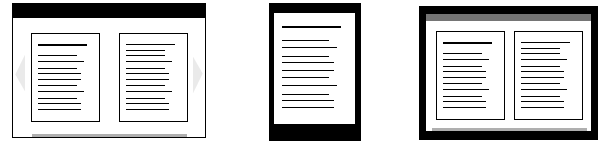
Epub.js is a JavaScript library for rendering ePub documents in the browser, across many devices.
Epub.js provides an interface for common ebook functions (such as rendering, persistence and pagination) without the need to develop a dedicated application or plugin. Importantly, it has an incredibly permissive Free BSD license.
Try it while reading Moby Dick
Why EPUB

The EPUB standard is a widely used and easily convertible format. Many books are currently in this format, and it is convertible to many other formats (such as PDF, Mobi and iBooks).
An unzipped EPUB3 is a collection of HTML5 files, CSS, images and other media – just like any other website. However, it enforces a schema of book components, which allows us to render a book and its parts based on a controlled vocabulary.
More specifically, the EPUB schema standardizes the table of contents, provides a manifest that enables the caching of the entire book, and separates the storage of the content from how it’s displayed.
Getting Started
Get the minified code from the build folder:
<script src="https://github.com/futurepress/epub.js/raw/v0.3.93/dist/epub.min.js"></script>
If using archived .epub files include JSZip:
<script src="https://cdnjs.cloudflare.com/ajax/libs/jszip/3.1.5/jszip.min.js"></script>
Set up a element to render to:
Create the new ePub, and then render it to that element:
<script>
  var book = ePub("url/to/book/package.opf");
  var rendition = book.renderTo("area", {width: 600, height: 400});
  var displayed = rendition.display();
</script>
Render Methods
Default
book.renderTo("area", { method: "default", width: "100%", height: "100%" });
The default manager only displays a single section at a time.
Continuous
book.renderTo("area", { method: "continuous", width: "100%", height: "100%" });
The continuous manager will display as many sections as need to fill the screen, and preload the next section offscreen. This enables seamless swiping / scrolling between pages on mobile and desktop, but is less performant than the default method.
Flow Overrides
Auto (Default)
book.renderTo("area", { flow: "auto", width: "900", height: "600" });
Flow will be based on the settings in the OPF, defaults to paginated.
Paginated
book.renderTo("area", { flow: "paginated", width: "900", height: "600" });
Scrolled: book.renderTo("area", { flow: "scrolled-doc" });
Scripted Content
Scripted content, JavasScript the ePub HTML content, is disabled by default due to the potential for executing malicious content.
This is done by sandboxing the iframe the content is rendered into, though it is still recommended to sanitize the ePub content server-side as well.
If a trusted ePub contains interactivity, it can be enabled by passing allowScriptedContent: true to the Rendition settings.
<script>
  var rendition = book.renderTo("area", {
    width: 600,
    height: 400,
    allowScriptedContent: true
  });
</script>
This will allow the sandboxed content to run scripts, but currently makes the sandbox insecure.
Documentation
API documentation is available at epubjs.org/documentation/0.3/
A Markdown version is included in the repo at documentation/API.md
Running Locally
install node.js
Then install the project dependences with npm
npm install
You can run the reader locally with the command
npm start
Examples
Testing
Test can be run by Karma from NPM
npm test
Building for Distribution
Builds are concatenated and minified using webpack and babel
To generate a new build run
npm run prepare
or to continuously build run
npm run watch
Hooks
Similar to a plugins, Epub.js implements events that can be "hooked" into. Thus you can interact with and manipulate the contents of the book.
Examples of this functionality is loading videos from YouTube links before displaying a chapter's contents or implementing annotation.
Hooks require an event to register to and a can return a promise to block until they are finished.
Example hook:
rendition.hooks.content.register(function(contents, view) {

    var elements = contents.document.querySelectorAll('[video]');
    var items = Array.prototype.slice.call(elements);

    items.forEach(function(item){
      // do something with the video item
    });

})
The parts of the rendering process that can be hooked into are below.
book.spine.hooks.serialize // Section is being converted to text
book.spine.hooks.content // Section has been loaded and parsed
rendition.hooks.render // Section is rendered to the screen
rendition.hooks.content // Section contents have been loaded
rendition.hooks.unloaded // Section contents are being unloaded
Reader
The reader has moved to its own repo at: https://github.com/futurepress/epubjs-reader/
Additional Resources

Epub.js Developer Mailing List
IRC Server: freenode.net Channel: #epub.js
Follow us on twitter: @Epubjs
- http://twitter.com/#!/Epubjs
Other
EPUB is a registered trademark of the IDPF.
Extension points exported contracts — how you extend this code
ViewportSettings (Interface)Core symbols most depended-on inside this repo
resolveShape
Languages
Modules by API surface
Dependencies from manifests, versioned
For agents
$ claude mcp add epub.js \
  -- python -m otcore.mcp_server <graph>