github.com/dramaclaw/dramaclaw @v1.0.2
Chat with this repoWhat it actually does AI analysis from the code graph — generated when you open this
README
DramaClaw
Make Your Own DC.
They say you're obsolete.
Maybe it's the whole idea of "working for someone else" that's obsolete.
In the age of AI, the real question isn't whether machines replace people.
The real question is:
Who owns the machines?
Who owns the pipeline?
Who owns industrialized productivity?
If the answer is always Big Tech,
then AI isn't empowerment.
It's just a new wall.
I'm Eric.
This isn't a demo.
Not a toy.
Not a crippled edition.
This is the industrialized drama-production line our own team runs every day.
From script to storyboard, from assets to finished film — the whole chain.
Because people aren't beasts of burden.
Because creativity is humanity's last line of defense.
What DramaClaw sets out to do is simple:
Tear down the wall.
Put the industrialized drama-production power that only Big Tech had
into the hands of ordinary creators.
The code is here.
If this resonates, leave a ⭐.
We'll keep tearing down walls.




English | 简体中文 | Website | Docs | Quick Start

🎬 Made with DramaClaw
Real short dramas our team produced on this very pipeline — click a link to play.
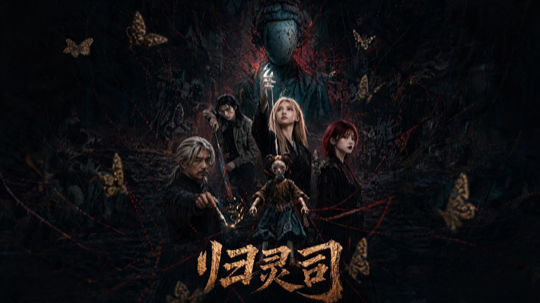 归灵司
▶ 第 1 集
归灵司
▶ 第 1 集
|
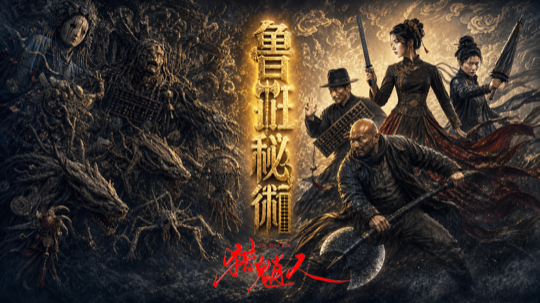 鲁班
▶ 第 1 集
鲁班
▶ 第 1 集
|
 师兄你怎么不舔了
▶ 第 1 集
师兄你怎么不舔了
▶ 第 1 集
|
 天命不可欺
▶ 第 02 集 · 第 58 集
天命不可欺
▶ 第 02 集 · 第 58 集
|
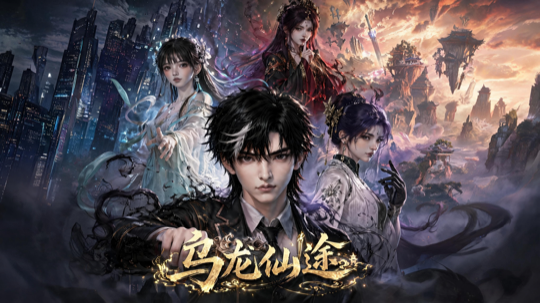 乌龙仙途
▶ 第 1 集
乌龙仙途
▶ 第 1 集
|
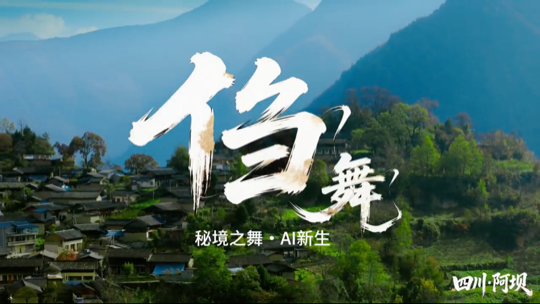 非遗㑇舞
▶ 播放
非遗㑇舞
▶ 播放
|
More clips: 3D 动漫混剪 demo · 动态打斗
What is DramaClaw?
DramaClaw is an industrialized drama-production line whose source is available. Drop in a manuscript and DramaClaw takes over all the heavy lifting: extracting characters, planning episodes, generating scripts, drawing storyboards and first frames, synthesizing voice-over, and cutting the final film.
It's built for creators, indie studios, and creative engineers — letting you run the whole "drama factory" on your own infrastructure, without stitching together a dozen disconnected tools or handing your material to an opaque black-box cloud service.
And although it's built around drama production, the same pipeline — characters, assets, scripts, storyboards, voice-over, and compositing — carries just as well to other visual-content formats: short-form ads, e-commerce product videos, and interactive otome (romance) games.
Core Capabilities
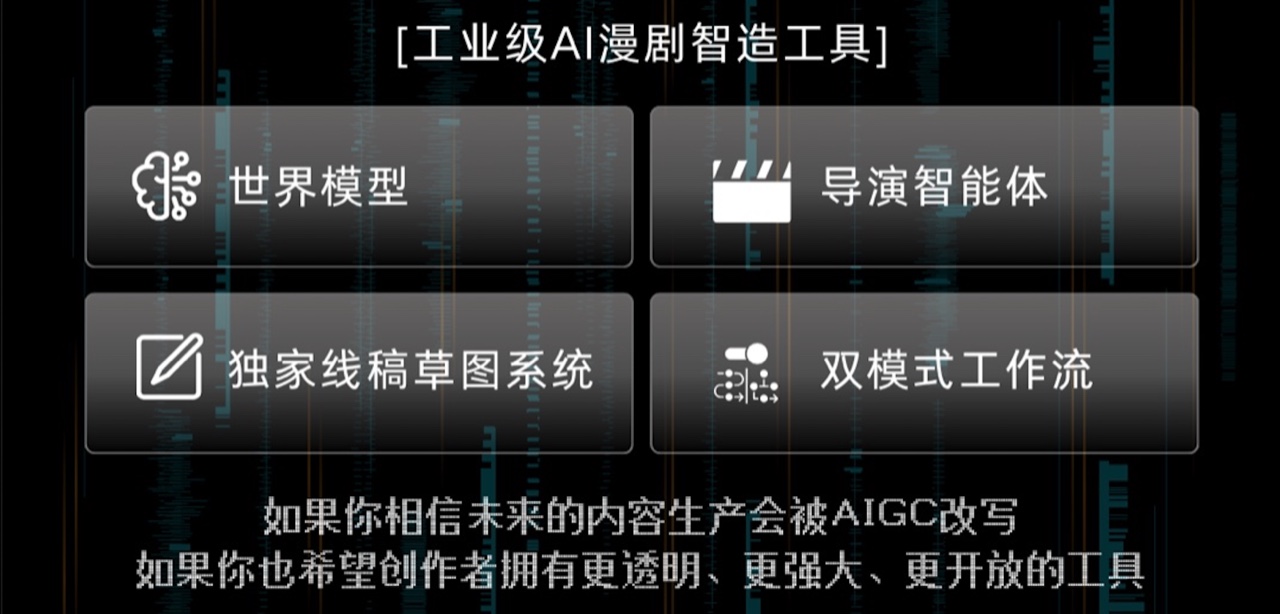
- Novel parsing & story graph — parse the manuscript into a queryable graph of characters, relationships, and timeline
- Asset Library & identity consistency — unified management of characters, scenes, props and voices; keep stable identities across episodes, generate character portraits and per-episode variants
- Episode planning & narrative pacing — automatic chapter segmentation, beat planning, multi-episode arcs
- Script generation — multiple modes (adaptive, literal, staged) with review / repair loops
- Storyboards & first frames — beat-driven stylized image generation, grid splitting, image-pool selection
 - Voice-over synthesis — emotion-aware speech synthesis, switchable across providers
- Video composition & export — assemble episodes, export video + subtitle files and the full asset pack
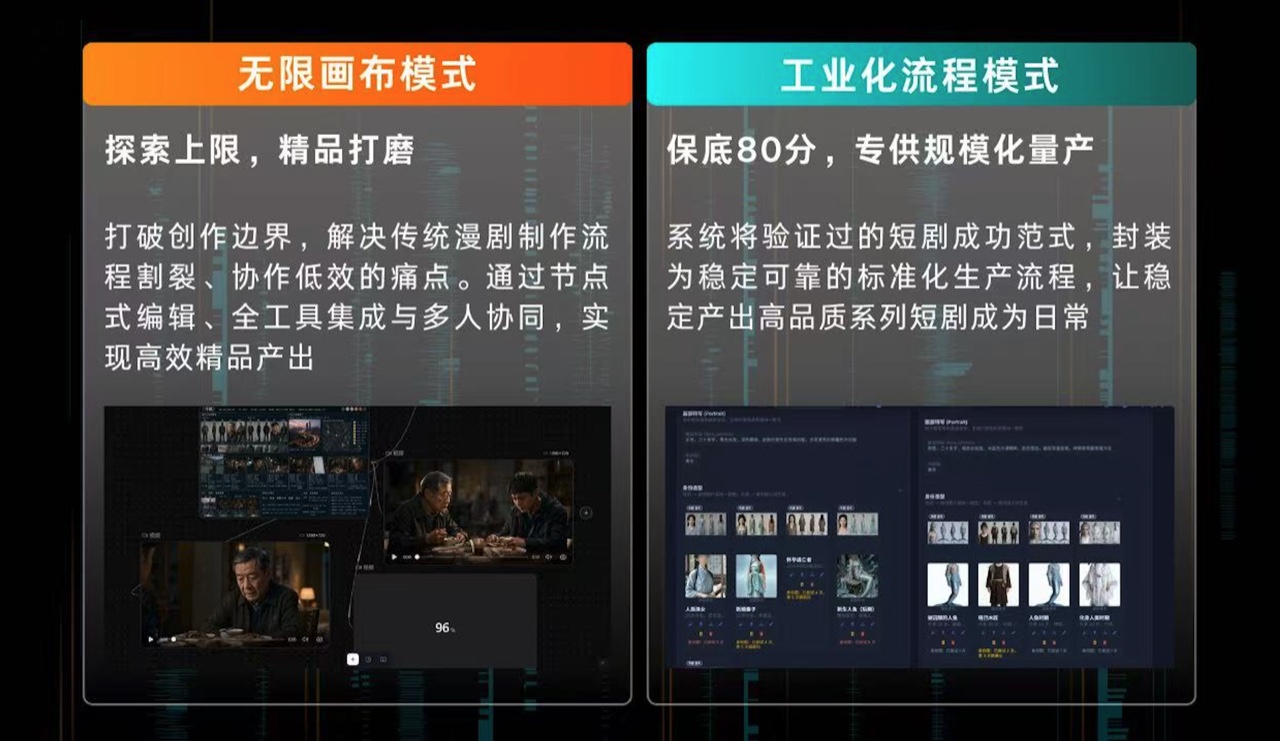
- Freezone (infinite canvas) — node-based visual workbench: drag in project assets to generate images / video / audio, promote satisfying candidates back to the main line; the main pipeline and canvas exploration run as dual tracks
- Voice-over synthesis — emotion-aware speech synthesis, switchable across providers
- Video composition & export — assemble episodes, export video + subtitle files and the full asset pack
- Freezone (infinite canvas) — node-based visual workbench: drag in project assets to generate images / video / audio, promote satisfying candidates back to the main line; the main pipeline and canvas exploration run as dual tracks
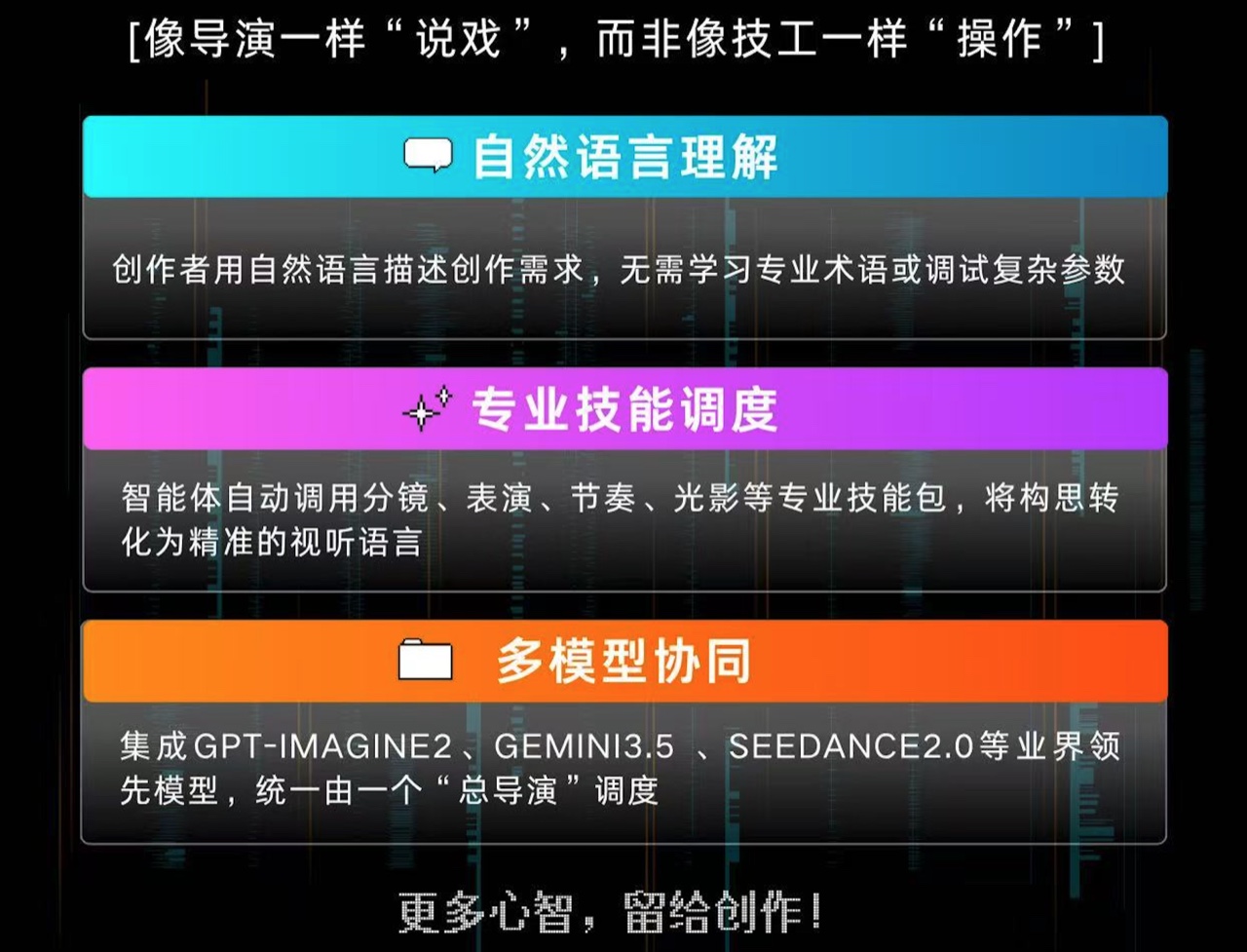
 - Director World / 3GS (scene variants) — a framable virtual set that locks spatial structure, character blocking and camera placement to keep the same location consistent across shots
 - Xia Director (AI assistant) — conversational production assistant that checks project progress, advances script / shot tasks, audits deliverable completeness and suggests next steps
 - Visual Style (style templates) — upload a reference image to auto-extract style parameters and apply them across the whole project for a consistent look
- Task Center — status, progress, logs and cancel / retry for background generation tasks, with resume-from-checkpoint for long runs
- Visual Style (style templates) — upload a reference image to auto-extract style parameters and apply them across the whole project for a consistent look
- Task Center — status, progress, logs and cancel / retry for background generation tasks, with resume-from-checkpoint for long runs
Pipeline at a Glance

Every step has its own interface — run them in order, skip steps, resume from any checkpoint, or even plug in your own orchestrator.
System Requirements
DramaClaw runs all inference through a remote OpenAI-compatible gateway — nothing runs models on your machine — so the local footprint is light. An ordinary laptop or a small VPS is enough.
| Item | Requirement |
|---|---|
| CPU / RAM | ≥ 2 vCPU / 4 GB recommended (excludes model inference — that runs on the gateway) |
| GPU | Not required for the standard pipeline. Only the optional world extra (voxel / panorama-to-3D) needs a GPU + CUDA image |
| Disk | A few GB for images plus generated media/state under the ce-data volume (no hard minimum) |
| OS | macOS (Apple Silicon / Intel), Windows (Docker Desktop + WSL2 backend), Linux (Docker Engine + compose plugin) |
| Docker | Docker + docker compose |
| Ports | 8080 web UI · 8780 REST API · 3000 bundled gateway (self-hosted variant only) |
| Datastores | None required — no Postgres, Redis, Celery or Ray. Tasks run in-process; state lives on the local filesystem (SQLite + files) |
| Network | Outbound access to the model gateway (official relayclaw.cdnfg.com, or your own BYO endpoint) |
Local development (non-Docker) additionally needs Python 3.11–3.12 +
uv+ffmpeg. Full prerequisites in the Self-hosting guide.
Quick Start
Docker (recommended)
git clone https://github.com/dramaclaw/dramaclaw.git
cd dramaclaw

cp .env.example .env
# Edit .env — set PROMPT_EXPORT_PASSWORD to a non-default value.
# NEWAPI_BASE_URL defaults to the official gateway; add your DC key here or paste it in the UI next.

docker compose up -d --build   # starts two services: api / web
Open the app at http://localhost:8080; the REST API is at http://localhost:8780. In Settings → Model Config → Official, paste your DC key (get one at https://relayclaw.cdnfg.com) and you're ready — no model mapping needed. Full steps in the Quick Start.
No build needed — every GitHub Release publishes multi-arch (amd64/arm64) images to Docker Hub, so a single file is enough to run:
curl -LO https://raw.githubusercontent.com/dramaclaw/dramaclaw/main/docker-compose.release.yml
docker compose -f docker-compose.release.yml up -d
# Pin a version (defaults to latest): DRAMACLAW_VERSION=1.0.1 docker compose -f docker-compose.release.yml up -d
Local development (uv + Python 3.11+)
git clone https://github.com/dramaclaw/dramaclaw.git
cd dramaclaw

uv sync
cp .env.example .env && $EDITOR .env

uv run novelvideo api --port 8780   # start the REST API (CE defaults to inline tasks, no Ray/Redis)
Supported Models & Providers
DramaClaw stays model-neutral — all text/image/video/audio models connect through a single OpenAI-compatible gateway, in two ways:
- DramaClaw official key (recommended):
docker compose up, open http://localhost:8080 → Settings → Model Config → Official, paste your DC key, save. Works instantly — no model mapping needed. Get a key at https://relayclaw.cdnfg.com. - Bring your own gateway (BYO): point
NEWAPI_BASE_URLat your own OpenAI-compatible endpoint and map model names (see Configuring Models).
Prefer fully local? Run
docker compose -f docker-compose.selfhosted.yml upfor a bundlednewapigateway you configure yourself (prebuilt-image variant:docker-compose.selfhosted.release.yml).
| Stage | Connected via gateway |
|---|---|
| Text / LLM | via OpenAI-compatible gateway (DramaClaw official key, or BYO) |
| Image | gpt-image · nano-banana |
| Video | Seedance 1.0 / 1.5 / 2.0 series · happyhorse |
| Voice-over | IndexTTS2 |
| Story graph | Cognee |
| Task runtime | in-process inline (no Ray / Redis / Celery) |
| Storage | local filesystem |
Why DramaClaw?
Built for novel-to-short-drama. General workflow tools can wire nodes together, but they don't know what an "episode beat" is, don't understand why a character's cross-scene identity consistency matters, and won't guard a chapter's emotional arc across image + voice + editing. DramaClaw builds all that judgment into the tool.
Every step is decomposable. Each stage is an independent async task with its own interface. Run sequentially, skip steps, resume mid-way — the toolchain itself is the product, with no hidden black box.
**Self-hostable, model-neut
Extension points exported contracts — how you extend this code
Core symbols most depended-on inside this repo
Shape
Languages
Modules by API surface
Datastores touched
For agents
$ claude mcp add dramaclaw \
  -- python -m otcore.mcp_server <graph>