github.com/andremichelle/openDAW @1.0.36 sqlite
README

openDAW



openDAW is a next-generation web-based Digital Audio Workstation (DAW) designed to democratize music production and to resurface the process of making music by making high-quality creation tools accessible to everyone, with a strong focus on education and data-privacy.
Subscribe to our Newsletter for regular updates.
Open-Source
We are committed to transparency and community-driven development.
The source code for openDAW is available under AGPL v3 (or later)
Built on Trust and Transparency
openDAW stands for radical simplicity and respect.
- No SignUp
- No Tracking
- No Cookie Banners
- No User Profiling
- No Terms & Conditions
- No Ads
- No Paywalls
- No Data Mining
Looking for Contributors
We welcome contributions that follow the existing style and conventions of the project. AI-assisted code is fine, but
every contributor must understand every line of code they submit. If you use AI tools, please document your process
in /plans. Keep pull requests small and focused. Large
PRs will not be reviewed. Split big contributions into smaller commits that add requirements gradually and maintain
operations of the app.
If you are interested in helping, here are areas where we need support:
- Offline App — e.g. wrapping openDAW with Tauri for a native desktop experience
- PWA — turning openDAW into a fully installable Progressive Web App with offline support
- Timeline Track Management — design and UX help for track layout, ordering, grouping, and interaction
We always appreciate help on open issues: https://github.com/andremichelle/openDAW/issues
To discuss contributions, book a call: https://calendly.com/andremichelle/opendaw-on-tour
Huge Shoutout To The Incredible openDAW Community!
To everyone who has contributed feedback, reported bugs, suggested improvements, or helped spread the word — thank you! Your support is shaping openDAW into something truly powerful!
Thank you @ccswdavidson, @Chaosmeister, @jeffreylouden, @solsos, @TheRealSyler, @Trinitou, and @xnstad for testing the repositories and identifying issues during the installation of openDAW!
Special shout-out to the biggest bug hunters: kanaris, @Chaosmeister and BeatMax Prediction. Your relentless attention to detail made a huge difference!
Huge thanks to our ambassadors, whose dedication and outreach amplify our mission!
And big hugs to all our supporters!
openDAW Visionary — $25.00
Stephen Tai, Pathfinder, One Sound Every Day (santino), kanaris, Oli Larkin
openDAW Supporter — $5.00
Cal Lycus, Jetdarc, Truls Enstad, Polarity, Ynot Etluhcs, Mats Gisselson, Ola, SKYENCE, BeatMax_Prediction, Kim T, Nyenoidz, Steve Meiers, 4ohm, Yito, Shawn Lukas, Tommes, David Thompson, Harry Gillich, OxVolt, Wojciech Miłkowski, skyboundzoo, JHINZ, Mark Dammer, fork-kun, Martin Eigel
openDAW Devices
Stock Plugins
- Vaporisateur (subtractive synth with classical waveforms)
- Playfield (sample drum computer with individual effect chains)
- Nano (nano sampler for a single audio file)
- Tape (playback device for audio regions and clips)
- Soundfont (soundfont player)
- MIDI Output (sends MIDI messages to other devices)
- Stereo Tool (volume, panning and invert the stereo signal)
- Delay (stereo delay with cross and filter options)
- Crusher (degenerates audio signal)
- Cheap Reverb (FreeVerb variation)
- Revamp (graphical equalizer with spectrum analyser)
- Arpeggio (plays the notes of a chord one after another)
- Pitch (offsets midi note pitches)
- Zeitgeist (transforms time)
- Velocity (manipulates velocities of incoming notes)
- Fold (waveform folding algorithm with oversampling)
- Tidal (shapes rhythm and space through volume and pan)
- Dattorro Reverb (dense algorithmic reverb based on Dattorro's design)
Ported Plugins (Excluded in commercial license)
- Compressor (CTAG Dynamic Range Compressor)
Repositories
- openDAW
- openDAW-headless (SDK)
- openDAW-headless @naomiaro (openDAW-headless fork with more docs and examples)
Roadmap
This roadmap represents an estimation of the upcoming development steps. Timelines and priorities may shift as openDAW evolves.
2025/Q4
- [X] Preset API
- [X] Full implementation of connecting several cloud services to store samples, projects, and presets
- [X] Implement audio playback algorithms (pitch, stretch, absolute) including interpolation
2026/Q1
- [X] Fade-in and out on audio-regions
- [X] Signature automation track
- [X] Tempo automation track
- [X] Fine-tune recording including loops (takes)
2026/Q2
- [ ] Fine-tune timeline clips (recording, switch times)
- [ ] Fine-tune MIDI effects
- [X] Implement missing region actions like flatten
- [ ] Polish UI
2026/Q3
- [ ] Testing & QA
- [ ] Launch 1.0
Future
- [ ] Start Modular System
- [ ] Add more synthesizers
- [ ] Add more effect devices
Prepare, Clone, Installation, and Run
openDAW tries to avoid external libraries and frameworks. The following is a list of the external libraries we currently use in the web studio:
- jszip (for openDAW project bundle file)
- markdown-it + markdown-it-table ( for help pages)
- d3-force (for graph debugging)
- soundfont2 (for soundfont loading)
- zod (schema validation)
- ffmpeg (decoding/encoding)
Before starting, ensure you have the following installed on your system:
- Git is required for cloning the repository and managing submodules.
- mkcert is required to create a certificate for developing with https protocol.
- Node.js version >= 23. This is necessary for running the development server and installing dependencies.
- Sass While Sass is handled internally during the development process, you will need to ensure you have the binaries available in your environment if used outside the build system.
- TypeScript
- OpenSSL For generating local development certificates (), OpenSSL needs to be installed on your system. Most Linux/macOS systems have OpenSSL pre-installed.
Clone
git clone https://github.com/andremichelle/opendaw.git && cd opendaw
Installation
npm run cert(only for the very first time)npm run clean(to revert to clean slate, removes allnode_modulesanddistfolders)npm install(for the first time and afternpm run clean)npm run build(for the first time and afternpm run clean)npm run dev:studio|npm run dev:headless(start dev server)- Navigate to https://localhost:8080 (port is important > cors sample api)
Flow Charts
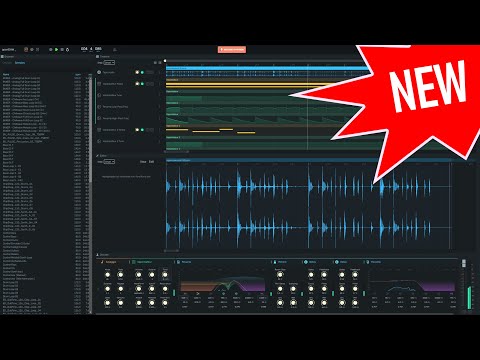
Watch Polarity's Video "there's a new FREE DAW in town"
Links
Contributions
Icons
- "Wave" by Gregor Cresnar from Noun Project (CC BY 3.0)
- "Compress" by Gregor Cresnar from Noun Project (CC BY 3.0)
- "Waveforms" by Austin Andrews
- "futurism" by Martin Königsmann from Noun Project
- "tape reel" by Evgeny Filatov from thenounproject
Dual-Licensing Model
openDAW is available under two alternative license terms:
| Option | When to choose it | Obligations |
|---|---|---|
| A. AGPL v3 (or later) | You are happy for the entire work that includes openDAW to be released under AGPL-compatible open-source terms. | – Must distribute complete corresponding source code under AGPL. |
– Must keep copyright & licence notices.
– Applies both to distribution and to public use via network/SaaS (§13).
– May run openDAW privately in any software, open or closed (§0). | | B. Commercial Licence | You wish to incorporate openDAW into closed-source or otherwise licence-incompatible software or SaaS offerings. | – Pay the agreed fee.
– No copyleft requirement for your own source code.
– Other terms as per the signed agreement. |
How to obtain the Commercial License
andre.michelle@opendaw.orgwith your company name, product description, and expected distribution volume.
If you redistribute or run modified versions of openDAW for public use without a commercial license, the AGPL v3 terms apply automatically.
License
AGPL v3 (or later) © 2025 André Michelle
Extension points exported contracts — how you extend this code
EffectFactory (Interface)Core symbols most depended-on inside this repo
getValueShape
Languages
Modules by API surface
Dependencies from manifests, versioned
For agents
$ claude mcp add openDAW \
  -- python -m otcore.mcp_server <graph>