github.com/NVIDIA/warp @v1.14.0 sqlite
README






NVIDIA Warp
Warp is a Python framework for GPU-accelerated simulation, robotics, and machine learning. Warp takes regular Python functions and JIT compiles them to efficient kernel code that can run on the CPU or GPU.
Warp comes with a rich set of primitives for physics simulation, robotics, geometry processing, and more. Warp kernels are differentiable and can be used as part of machine-learning pipelines with frameworks such as PyTorch, JAX and Paddle.
<img src="https://github.com/NVIDIA/warp/raw/main/docs/img/header.jpg">
A selection of physical simulations computed with Warp
Quick Start
Simulate one million particles under gravitational attraction, in 20 lines:
import warp as wp
import numpy as np

num_particles = 1_000_000
dt = 0.01

@wp.kernel
def gravity_step(pos: wp.array[wp.vec3], vel: wp.array[wp.vec3]):
    i = wp.tid()
    position = pos[i]
    dist_sq = wp.length_sq(position) + 0.01  # softened distance
    acc = -1000.0 / dist_sq * wp.normalize(position)  # gravitational pull toward origin
    vel[i] = vel[i] + acc * dt
    pos[i] = pos[i] + vel[i] * dt

rng = np.random.default_rng(42)
positions = wp.array(rng.normal(size=(num_particles, 3)), dtype=wp.vec3)
velocities = wp.array(rng.normal(size=(num_particles, 3)), dtype=wp.vec3)

for _ in range(100):
    wp.launch(gravity_step, dim=num_particles, inputs=[positions, velocities])

print(positions.numpy())
Installing
Python version 3.10 or newer is required. Warp can run on x86-64 and ARMv8 CPUs on Windows and Linux, and on Apple Silicon (ARMv8) on macOS. GPU support requires a CUDA-capable NVIDIA GPU and driver (minimum GeForce GTX 9xx).
The easiest way to install Warp is from PyPI:
pip install warp-lang
You can also use pip install warp-lang[examples] to install additional dependencies for running examples and USD-related features.
For nightly builds, conda, CUDA 13 builds, building from source, and CUDA driver requirements, see the Installation Guide.
Tutorial Notebooks
The NVIDIA Accelerated Computing Hub also hosts Warp tutorial notebooks that can be opened in Colab:
| Notebook | Colab Link |
|---|---|
| Introduction to NVIDIA Warp |  |
| GPU-Accelerated Ising Model Simulation in NVIDIA Warp | |
Running Examples
The warp/examples directory contains examples covering physics simulation, geometry processing, optimization, and tile-based GPU programming. Before running examples, install the optional example dependencies using:
pip install warp-lang[examples]
On Linux aarch64 systems (e.g., NVIDIA DGX Spark), the [examples] extra automatically installs
usd-exchange instead of usd-core as a drop-in replacement,
since usd-core wheels are not available for that platform.
Examples can be run from the command-line as follows:
python -m warp.examples.<example_subdir>.<example>
Most examples can be run on either the CPU or a CUDA-capable device, but a handful require a CUDA-capable device. These are marked at the top of the example script. Some examples generate USD files containing time-sampled animations in the current working directory. These can be viewed in Pixar's UsdView, Blender, or any USD-compatible viewer.
To browse the example source code, you can open the directory where the files are located like this:
python -m warp.examples.browse
warp/examples/core
 |
 |
 |
 |
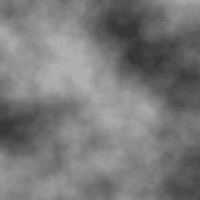
| dem | fluid | graph capture | marching cubes |
 |
 |
 |
 |
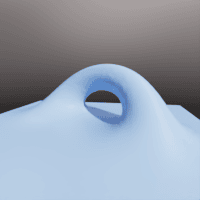
| mesh | nvdb | raycast | raymarch |
 |
 |
 |
 |
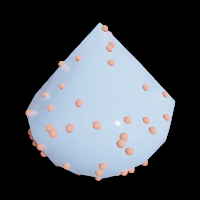
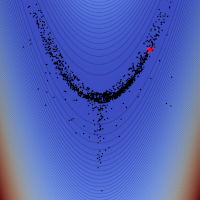
| sample mesh | sph | torch | wave |
 |
|||
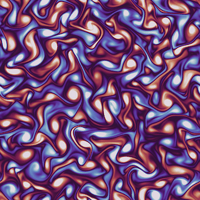
| 2-D incompressible turbulence in a periodic box |
warp/examples/fem
 |
 |
 |
 |
| diffusion 3d | mixed elasticity | apic fluid | streamlines |
 |
 |
 |
 |
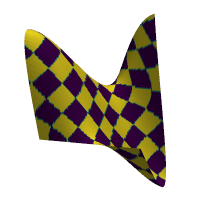
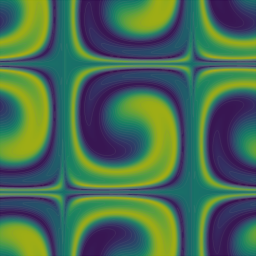
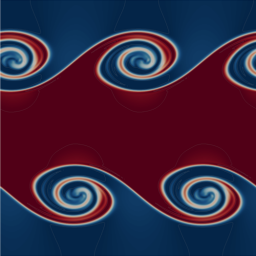
| distortion energy | taylor green | kelvin helmholtz | magnetostatics |
 |
 |
 |
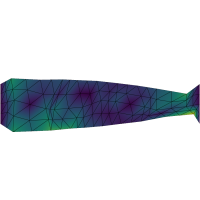 |
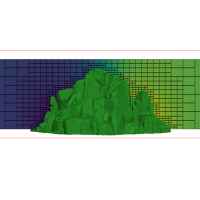
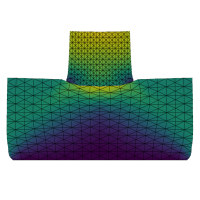
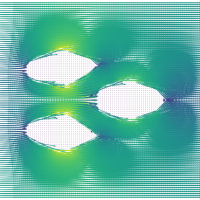
| adaptive grid | nonconforming contact | darcy level-set optimization | elastic shape optimization |
warp/examples/optim
 |